Community projects
A movement that only ever arrives to ask for something is one people learn to avoid.
Projects are not an afterthought to organising. They are how a relationship survives the campaign that started it, and they are the reason a community takes the next call.
01
The Makaranta Almajiri Project
Launched 20 November 2022
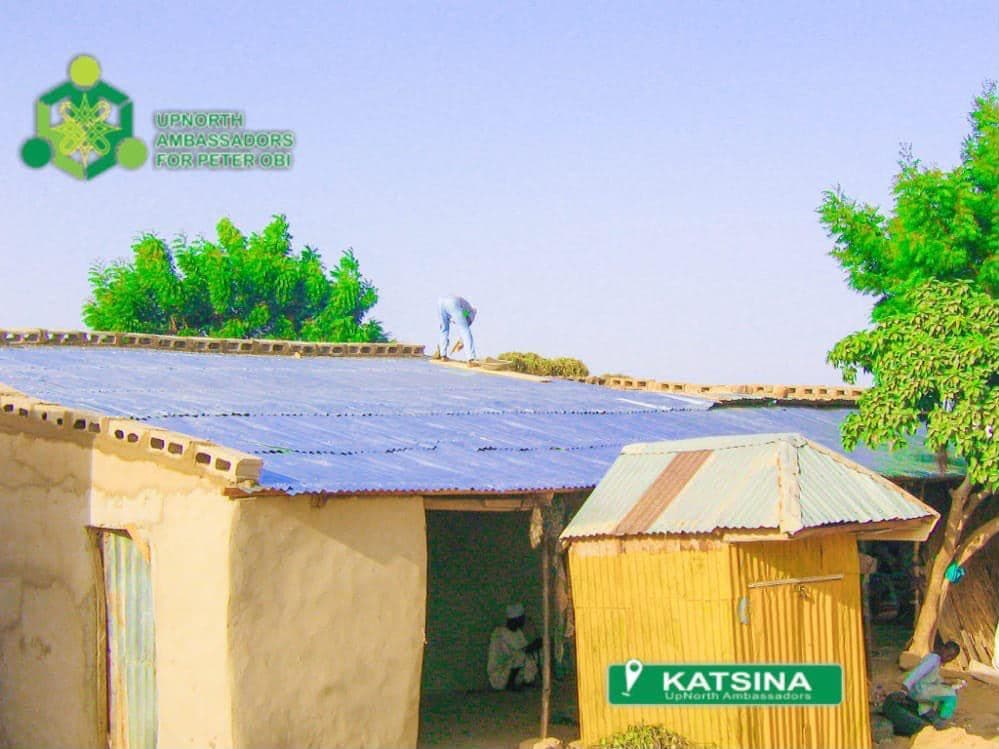
Rebuilding and re-roofing an almajiri school, so that the children studying in it had a building that kept the weather out.
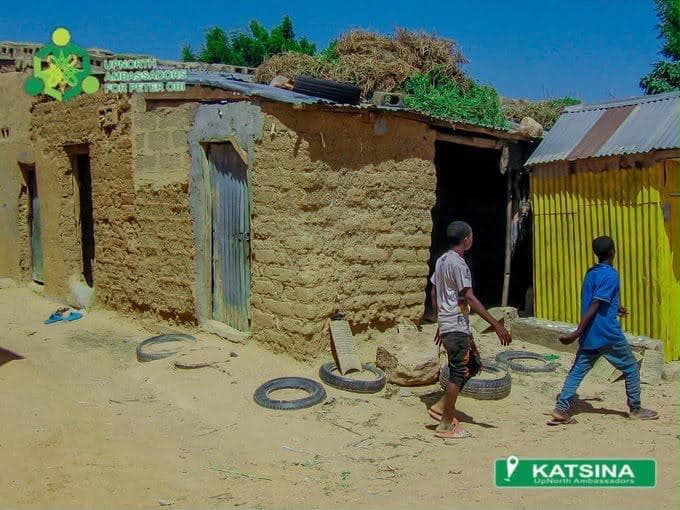
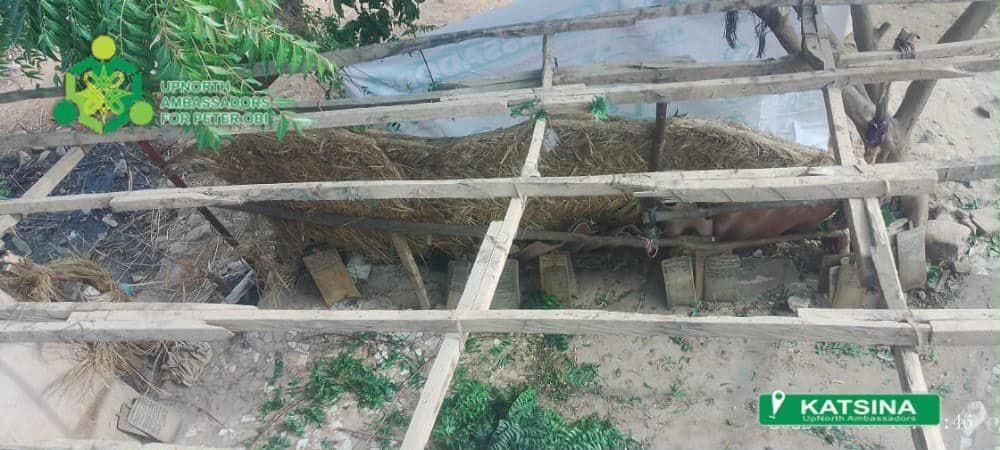
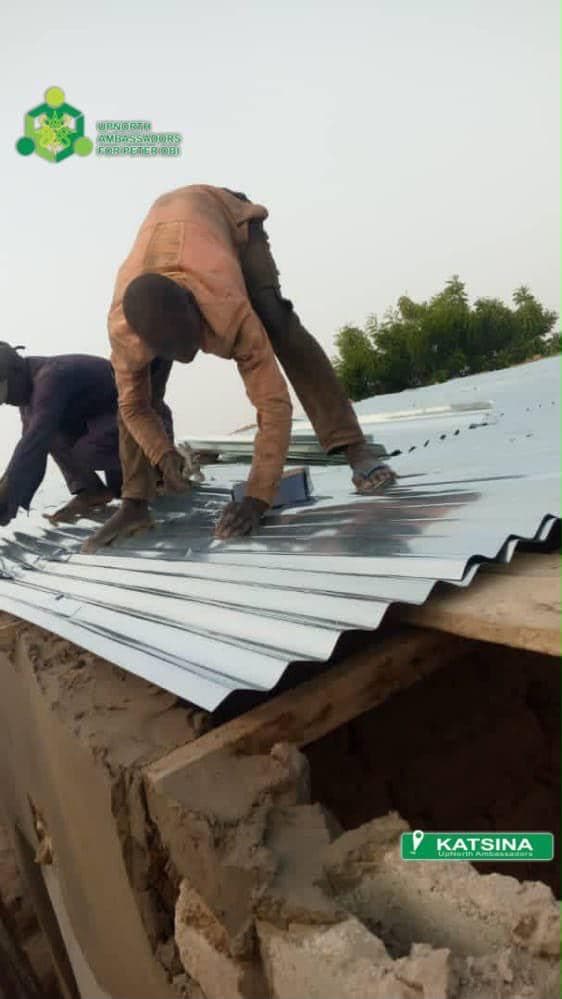
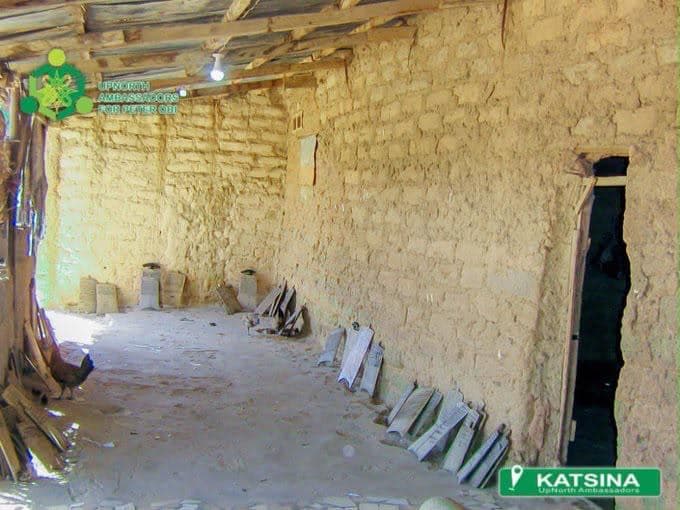
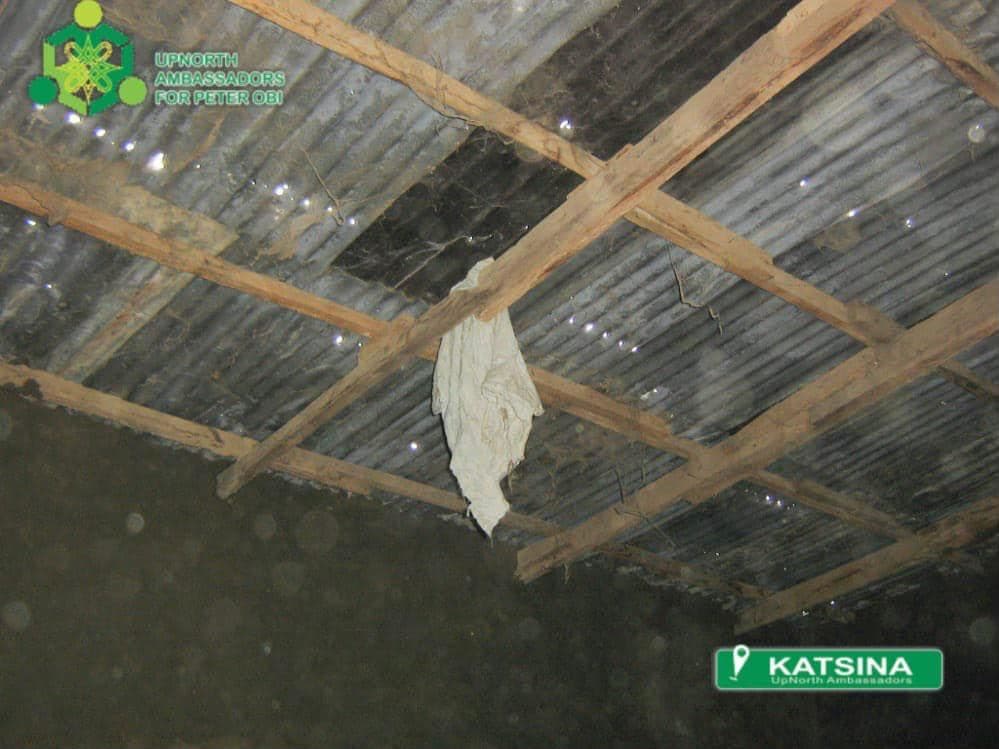
The school was found as a mud-brick building with a failed roof: rotted timbers, thatch giving way, and daylight through the structure. The project stripped the roof, replaced the timbers, fixed new sheeting across the whole span and made the building good.
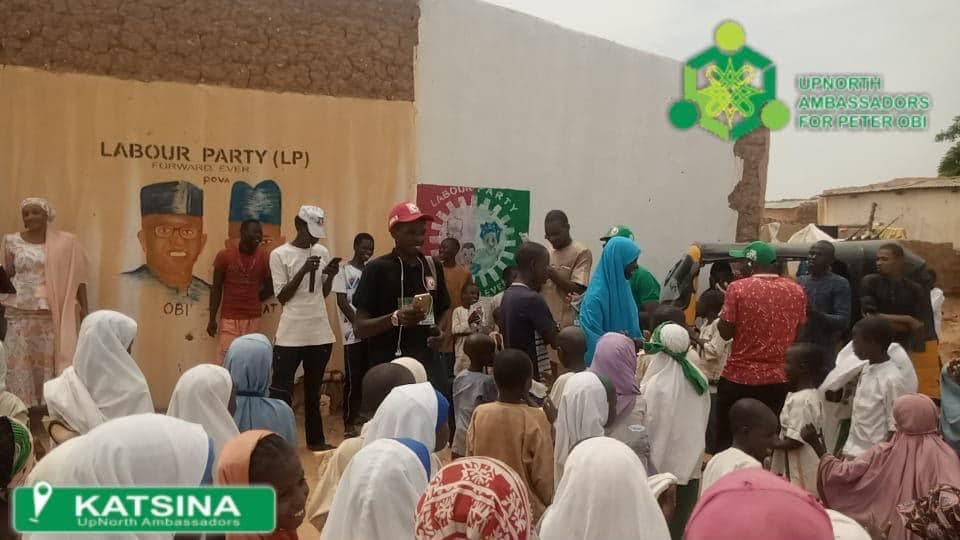
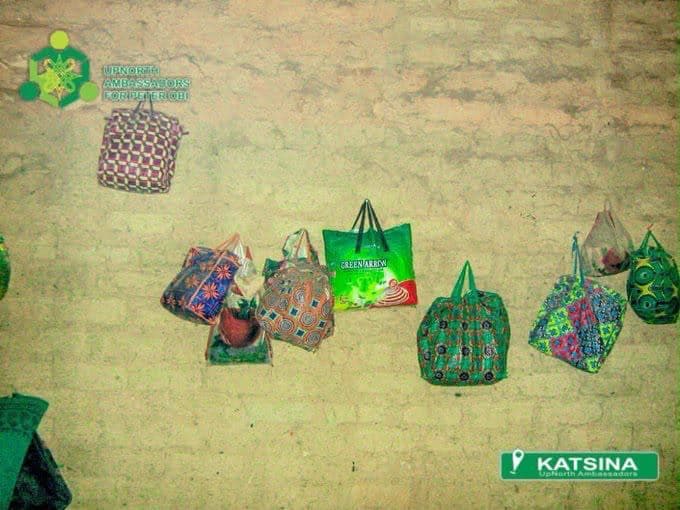
It was launched publicly on 20 November 2022, with the movement raising the money for it in the open, and the children were equipped as well as housed.
02
Mosque renovation
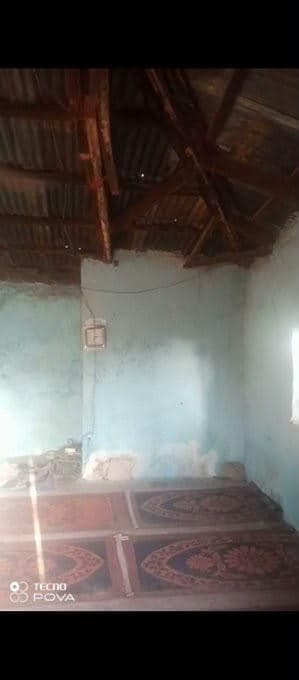
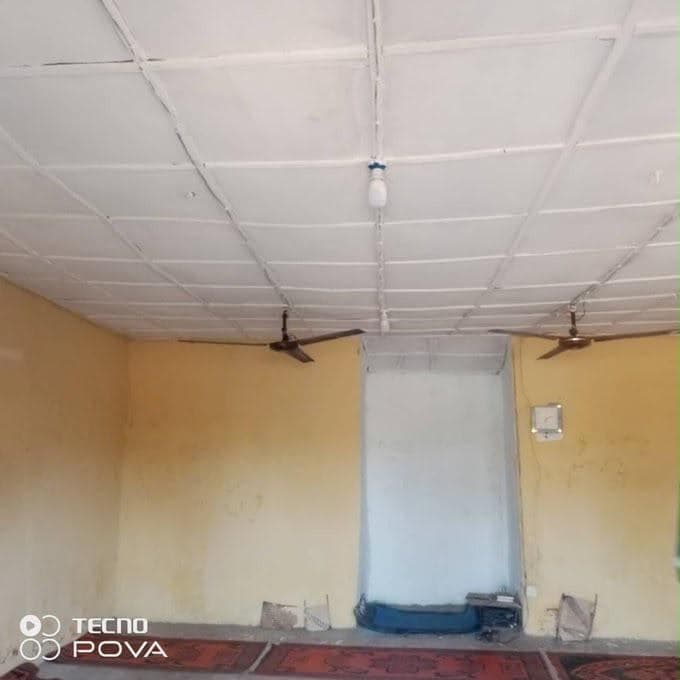
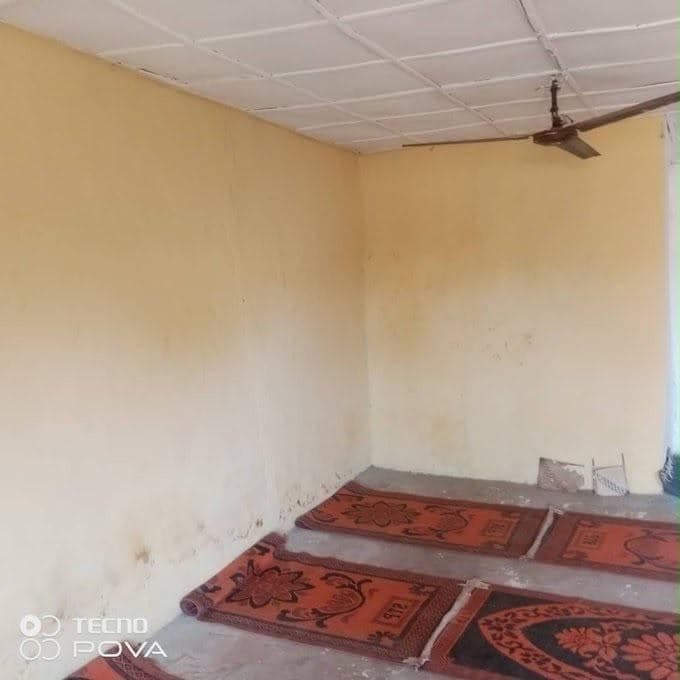
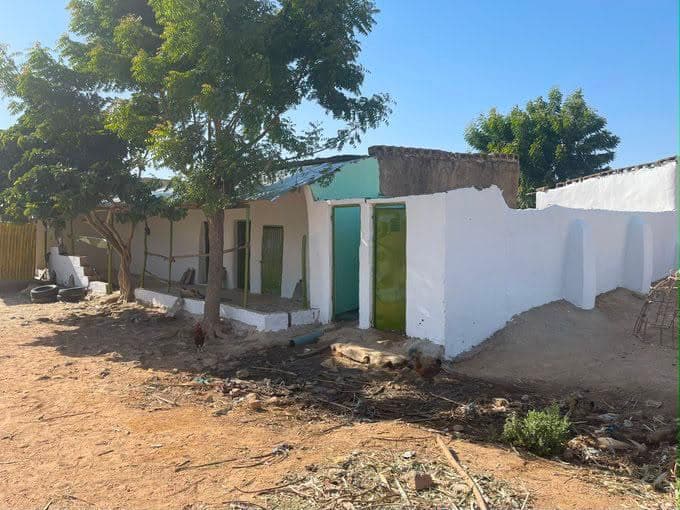
A community mosque stripped, repaired, plastered, ceiled and fitted out, from a bare room under a failing roof to a finished prayer space.
The mosque was in the same condition as much of the community around it: bare mud walls, a corrugated roof past saving, and nothing between the congregation and the ceiling.
The work took it back to the structure and rebuilt it: a new roof, a finished ceiling, plastered and painted walls, fans fitted, and the floor laid with prayer mats. The exterior was rendered and whitewashed with the rest of the compound.
03
Clean water
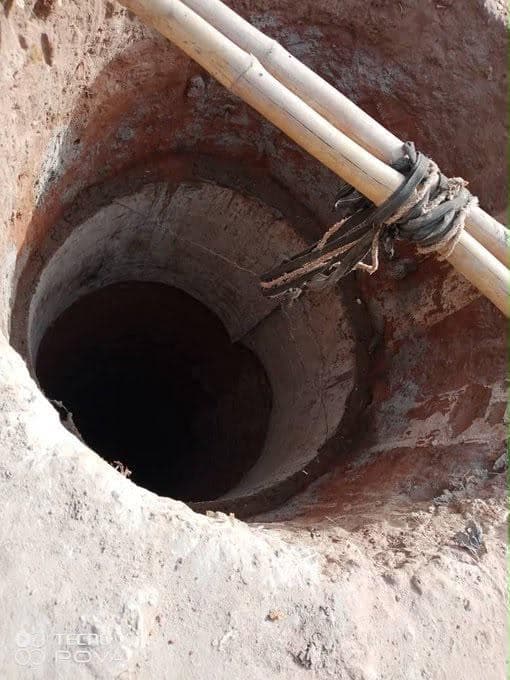
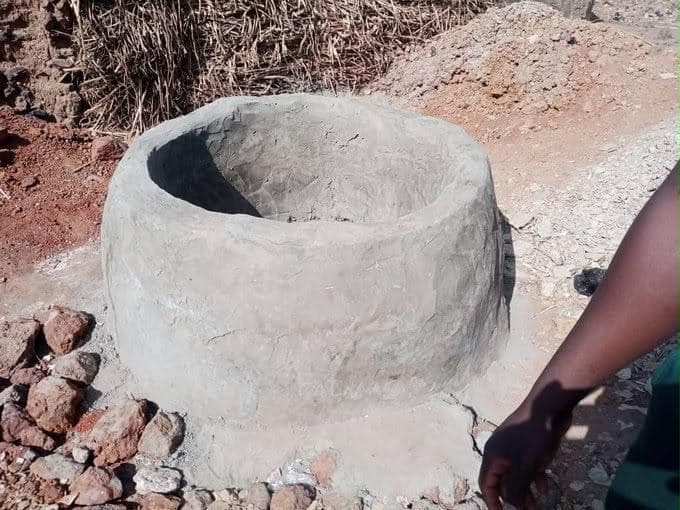
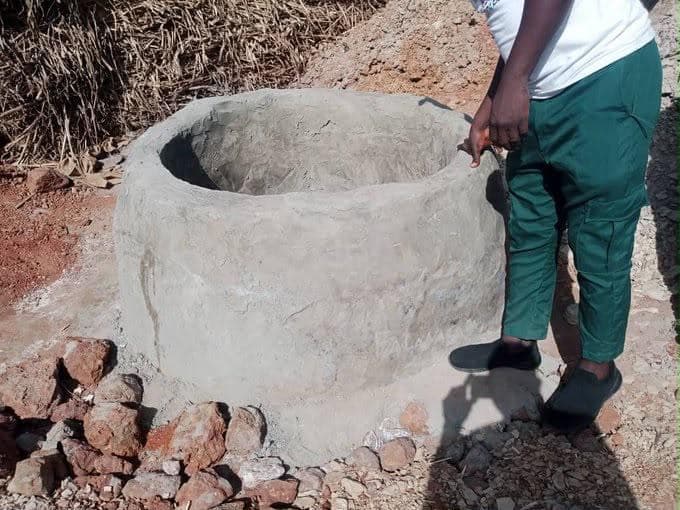
Hand-dug wells sunk and collared in communities with no reliable clean water nearby.
A well is not a campaign message. It is the most direct answer available to the thing a community will tell you about first, if you go and ask them rather than telling them.
Each one was dug by hand, lined and finished with a concrete collar so it is safe to draw from and will not fall in.
04
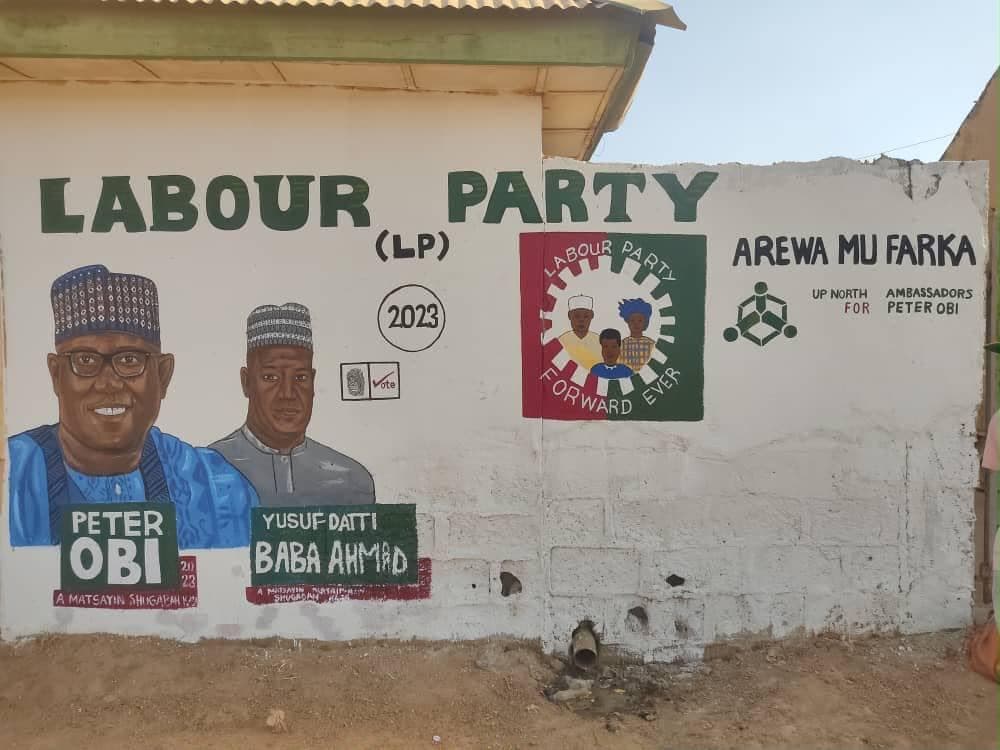
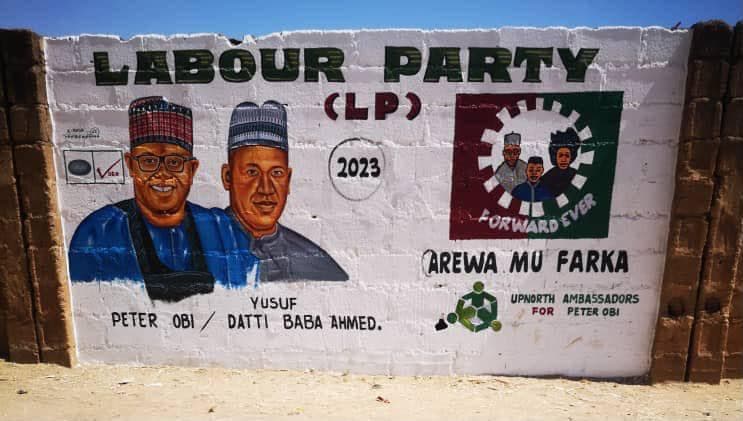
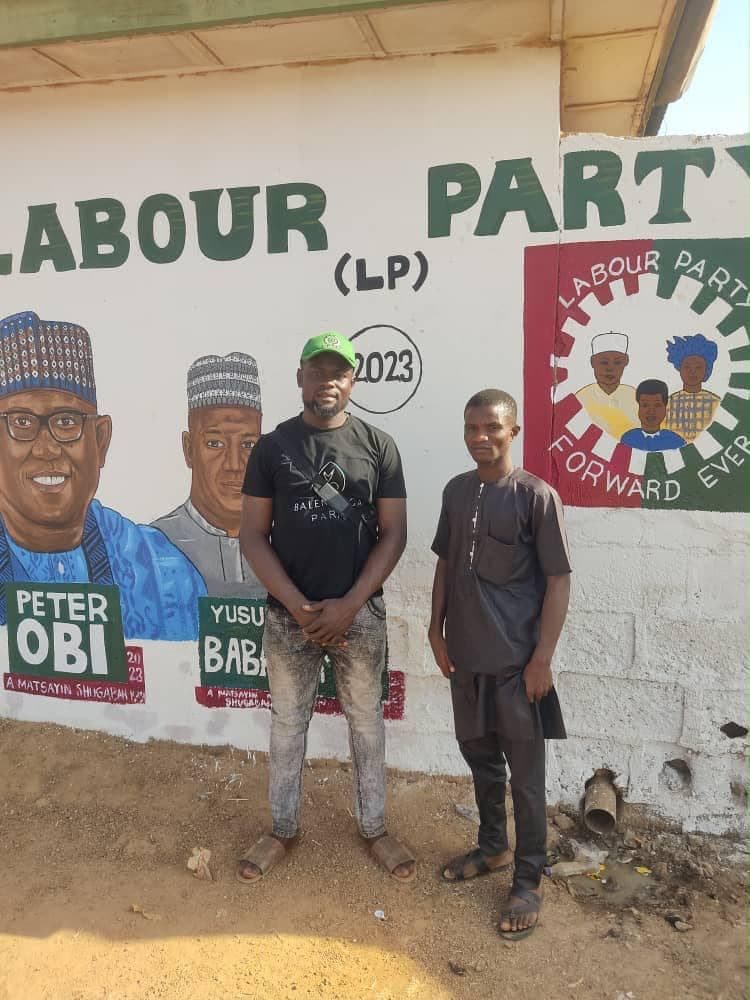
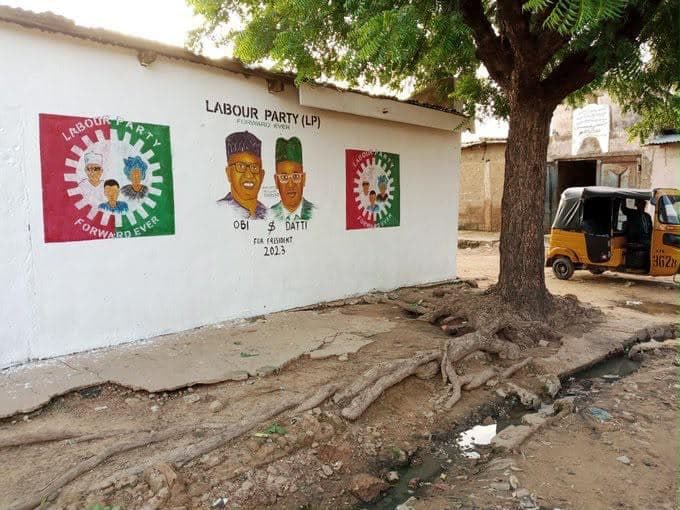
Arewa Mu Farka: the wall murals
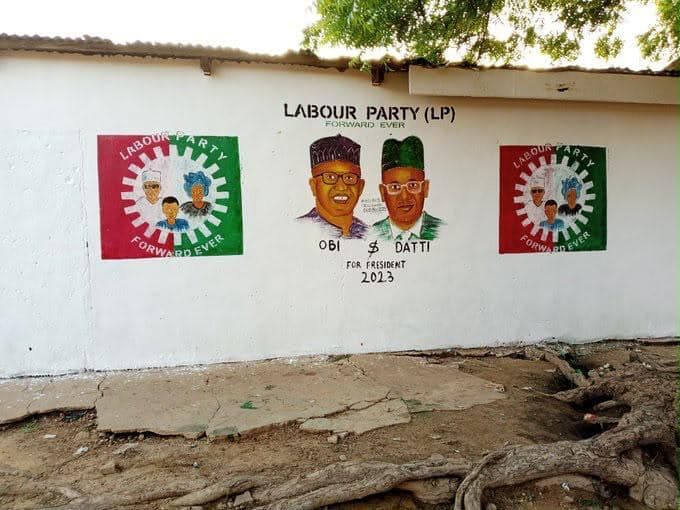
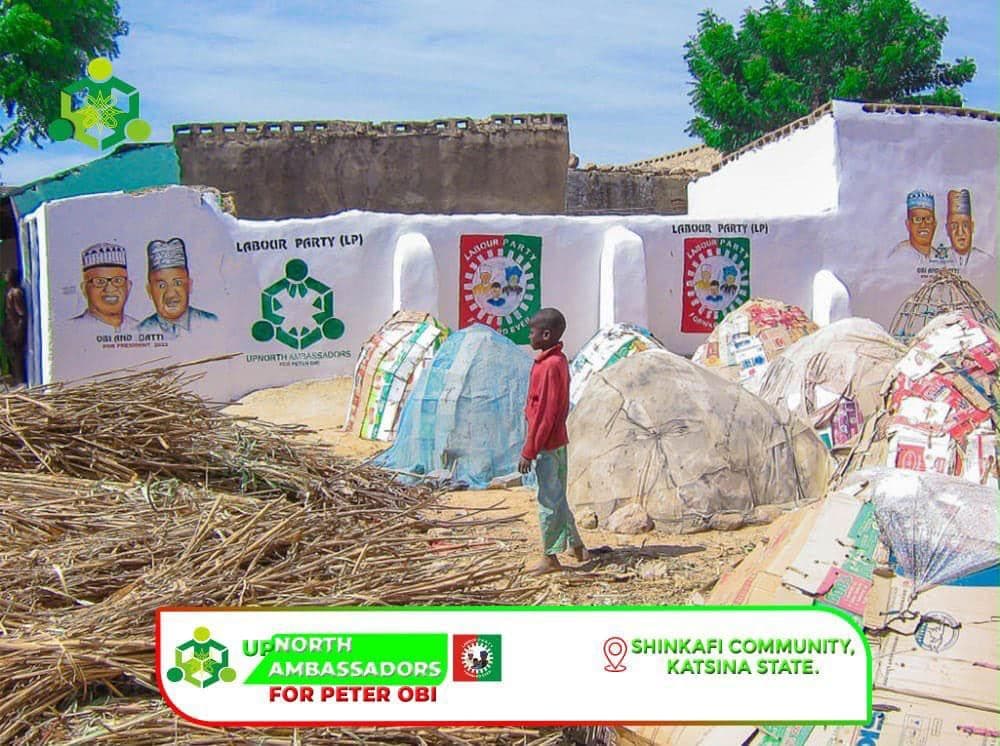
Hand-painted murals across community walls, carrying the message in Hausa to people who would never see a billboard.
Arewa Mu Farka: “the North has woken up”. The murals were painted directly onto compound walls, shopfronts and street corners by hand, in the communities they were meant for.
It is the cheapest and most durable communication available in a place with no billboard sites, unreliable television and expensive data. A wall does not need power, a signal or a subscription, and it is still there the following year.
05
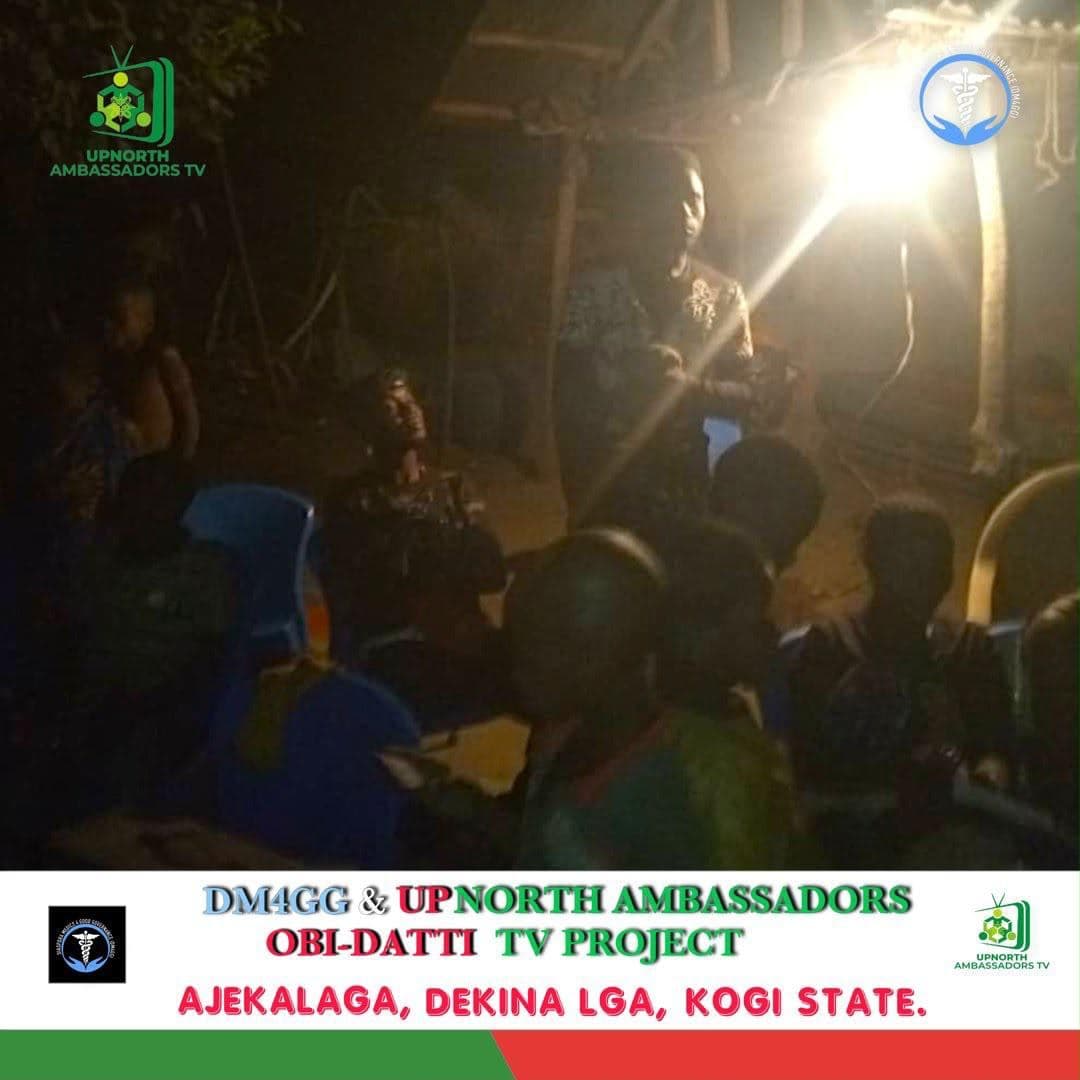
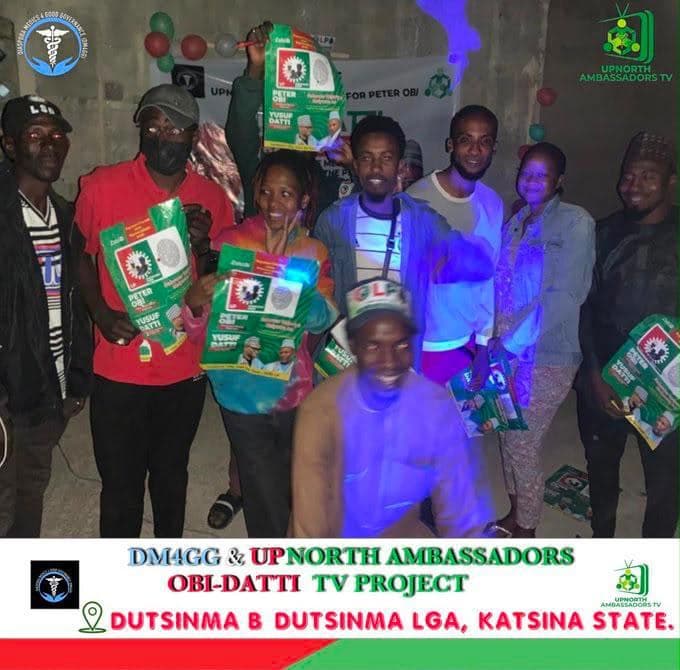
The Obi/Datti Grassroots TV Project
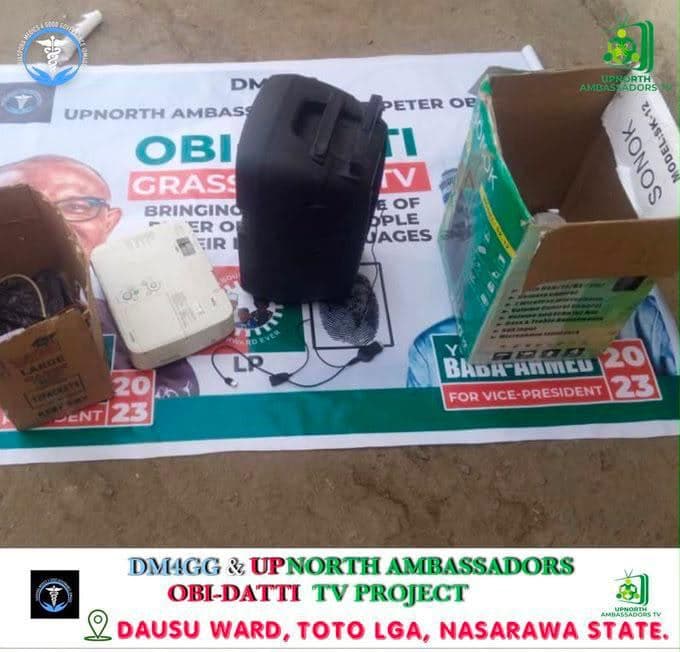
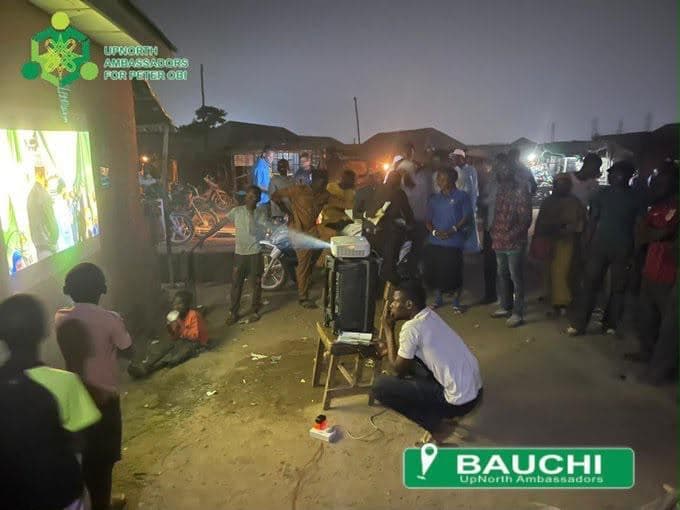
A mobile screening operation that carried the campaign into villages by projector and speaker, after dark, where there was no other way to reach them.
Run with DM4GG, the project took a projector, a screen and a sound system into communities across Bauchi, Kogi, Katsina, Sokoto and beyond: places with no reliable television, no newspaper distribution and little bandwidth.
It is the clearest single example of the method: if the message cannot reach the community, take the means of reaching them along with you.
Why projects
A well is not a campaign message. It is the answer to the thing a community tells you about first, if you go and ask.
What is on this page
Only what can be shown.
Every project listed here is photographed on this page. We hold no total for schools, wells or screenings, so we print none. A figure a reader cannot check is not evidence; it is decoration.
Who delivered them
Local coordinators, in their own communities.
These were not run by a team sent in for the day. They were organised by ambassadors who live where the work happened, which is the only reason the relationships outlasted them.
Know a community that needs one?
Tell us where you organise and what the need actually is. The projects that work are the ones a local coordinator brought to us, not the ones we thought of.